
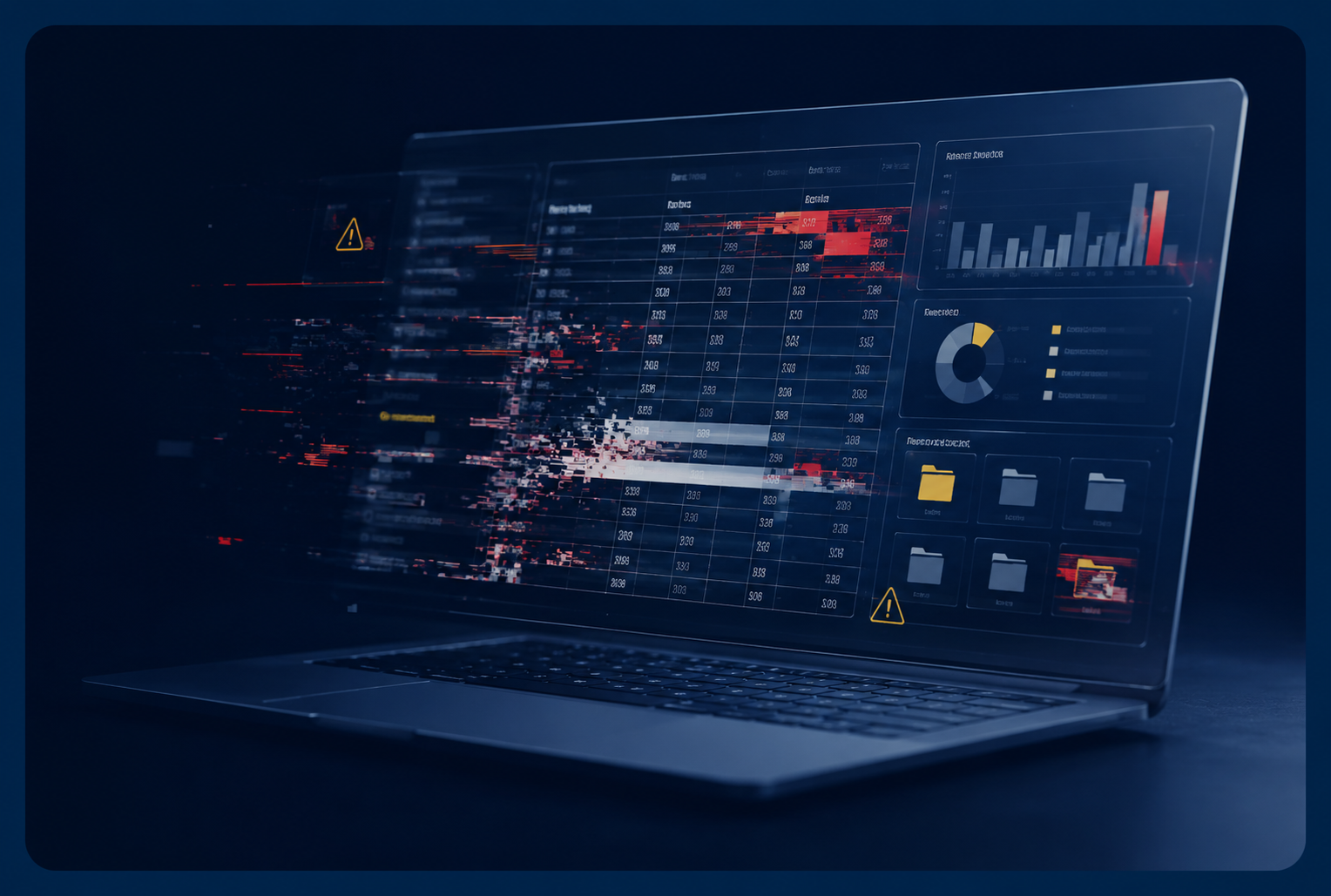
Data vandalism is the intentional and malicious alteration of digital information. Instead of simply stealing a file, the attacker changes, corrupts, or deletes the information your business relies on. It is like someone getting into your company’s shared drive and quietly changing invoice amounts, deleting customer notes, or replacing important files with incorrect versions. The damage may not be immediately obvious, but the decisions built on that data can quickly go wrong.
For small and medium-sized businesses in Upstate South Carolina, the risk is practical. Bad data can delay customer service, disrupt billing, damage reports, and weaken customer trust.
| Key takeaways – Data vandalism happens when attackers intentionally change, corrupt, or delete business data, making records unreliable and decisions based on those records harder to trust. – Common entry points of data vandalism include phishing attempts, weak passwords, stolen login credentials, poor access controls, and unpatched software vulnerabilities. – Businesses can reduce risk with layered protections such as multi-factor authentication, strong password management, role-based access, secure backups, proactive monitoring, and regular security audits. |
Cyber vandalism definition
Cyber vandalism is the intentional act of damaging digital property, affecting websites, files, databases, networks, applications, and similar digital assets. It is also referred to as electronic vandalism because the goal is similar to physical vandalism: to deface, damage, or disrupt property.
Why it matters to your business
Many cyber attacks are built around gaining money. To do this, criminals may steal data, demand ransom, or sell sensitive information. Data vandalism differs from most cyber attacks in that, in a data vandalism attack, the attacker might aim for disruption rather than financial gain. The repercussions of data vandalism can be costly, especially if your team must stop work to rebuild records and investigate the extent of damage.
A real-world example is the 2021 Oldsmar, Florida water treatment facility incident. According to a joint advisory from the Cybersecurity and Infrastructure Security Agency, or CISA, unauthorized actors used the facility’s control system software to increase the amount of sodium hydroxide used in the water treatment process. Staff noticed the change and corrected it before it caused harm. The case shows why data tampering is so dangerous — a small unauthorized change inside a trusted system can result in a serious cyber incident.
Cyber vandals
Cyber vandals may be outsiders, disgruntled insiders, activists, pranksters, or criminals hiding inside compromised systems, with motives that can include revenge, protest, attention, or sabotage. For instance, a malicious insider might change financial records before leaving a company, or an attacker with stolen login credentials might alter a customer database to disrupt operations or undermine data integrity.
Types of cyber vandalism
Common types of cyber vandalism include website defacement, data tampering, data destruction, account takeovers, and social media vandalism.
There are also more technical versions, such as those involving corrupting AI training data, sabotaging open-source repositories, altering IoT sensor readings, or poisoning business dashboards with false numbers.
Website defacement
Website defacement happens when an attacker replaces your site content with unauthorized messages, offensive images, or political statements. It is the online version of digital graffiti. For a local business, even a short defacement can make customers wonder if payment forms, contact forms, or account portals are safe.
Data tampering
Data tampering means changing information without authorization. Examples include altering prices, changing bank details, editing inventory counts, or modifying client records. The danger is that tampered data may look normal. Your team may not notice the issue until a customer complains or discrepancies appear in a report.
Data destruction
Data destruction is the deletion or corruption of critical data. Attackers may wipe folders, damage backups, or corrupt data files.
Reliable backups help reduce the disruption from data loss incidents as well as give your team a clean recovery point when records are damaged.
DDoS attacks
Distributed denial-of-service attacks (DDoS) involve flooding a target’s network or website with excessive traffic. A denial-of-service attack may not change records, but it can block customers and employees from using key systems. The impact of such attacks can be reduced by using strong DDoS protection services, a web application firewall, and filtering for malicious traffic.
DNS attacks
The Domain Name System (DNS) connects users to the websites and online services they need. When attackers tamper with this process, they can redirect traffic, interrupt access, or send customers to fake pages. They may do this by altering DNS records, abusing DNS software, or using DNS spoofing to make fraudulent destinations look legitimate.
That makes monitoring DNS traffic and tightly controlling DNS records important. Together, these steps help businesses spot suspicious activity sooner and reduce the risk of attackers quietly rerouting users away from trusted services.
Social media and collaboration tools
Social media vandalism can involve harmful posts, fake announcements, or offensive content published through a compromised social media account. Vandalism can also occur on collaboration platforms, such as when a user with the wrong permissions introduces false facts, removes instructions, or corrupts shared documentation.
Common attack routes
Most data vandalism does not begin with a dramatic break-in but with ordinary security gaps that give attackers a way in. A convincing email, a reused password, an outdated application, or a poorly protected admin account can be enough to gain access to business systems.
Common entry points include:
- Phishing attempts and phishing scams that trick employees into sharing login details
- Social engineering tactics that pressure people into approving access or changing information
- Malicious software that gives attackers control over files or systems
- Weak access settings that expose sensitive records to the wrong users
- Software vulnerabilities that allow attackers to exploit vulnerabilities in unpatched systems
Weak passwords and stolen access
Password problems remain one of the easiest ways for attackers to reach sensitive systems. Weak passwords, reused credentials, shared accounts, and unprotected admin logins all make it easier for someone to impersonate a legitimate user and quietly alter business data.
Better password management helps close that gap. Employees should use strong passwords, avoid reusing credentials across accounts, and protect important systems with multi factor authentication (MFA) to add another layer of defense on top of a password.
Access controls
Strong access controls help limit the damage a compromised account can cause. Employees should only be able to view, edit, delete, or approve the tools and data their roles require, reducing what an attacker could access or change if the account is breached.
Role-based access can also separate routine work from high-risk administrative functions. For example, an entry-level employee may need access to customer records but should not have permission to erase databases, change core business settings, or modify security configurations.
Monitoring and detection
Network monitoring tools help spot unusual activity across your IT systems, servers, endpoints, and digital systems. They can flag strange logins, suspicious file changes, unexpected traffic spikes, and connections to known bad destinations.
Proactive monitoring is especially important because vandalism can hide in plain sight. The faster your team detects changes, the easier it is to contain the damage.
Regular security audits
Regular security audits help your business find weak points before attackers do. Audits can reveal outdated software, poor permissions, exposed services, missing backups, and risky account settings that may otherwise go unnoticed.
Pairing audits with vulnerability scanning gives you an even clearer picture of where attackers could break in. Once those weaknesses are identified, regular software updates and timely patching help close the gaps they often target.
How to prevent cyber vandalism
You may not be able to remove every risk of cyber vandalism, but you can make your business much harder to target. Cyber vandalism prevention starts with layered controls, clear recovery steps, and regular review so small gaps do not turn into major problems. For SMBs in South Carolina and surrounding areas that do not have the time, tools, or staff to manage every risk on their own, Birdseye helps strengthen digital security through monitoring, layered protection, backups, and straightforward support.
If you are worried about data vandalism, compromised accounts, or growing cyber threats, you do not have to figure it out by yourself. We can review your current setup, identify weak points, and recommend practical steps to protect critical data from being altered, deleted, or disrupted.
Want to discover trusted cybersecurity services for your business? Reach out to Birdseye Technical Services through our Contact Us page and book your free technical assessment.